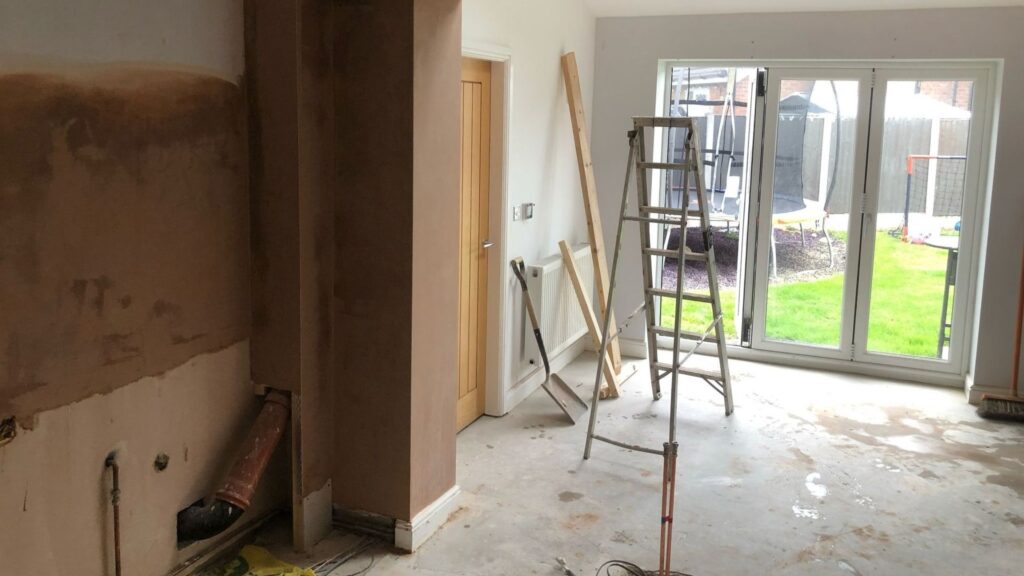
Seeing an extension or renovation take shape can change how you want to use it. A doorway may feel better in another position, or a material you liked on a sample may no longer suit the room. Changing your mind mid-build is possible in some circumstances, but the decision needs more than a quick conversation beside the work.
Before authorising a change, establish what it alters, what it costs, and what happens to the programme. A written variation records the agreed difference from the original work. It helps the homeowner and builder continue from the same set of instructions.
Start with the agreement already in place
Find the accepted quotation, specification, drawings, and contract. Check the version dates, then identify the particular item you want to change. This avoids discussing an alteration against a drawing that has already been replaced, or treating an item included in the original scope as an extra.
Describe the outcome you want in plain language. “Move the doorway to leave a longer wall for furniture” explains the purpose more clearly than “change the layout”. The builder and designer can assess whether your idea achieves that purpose and whether there are other ways to achieve it with less disruption.
Use the communication route agreed for the project. Ask who can assess the proposal and who has authority to approve it. Giving separate instructions to different trades can leave everyone with a different understanding, particularly where one change affects structure, services, and finishes.
A request for information is not the same as permission to proceed. Make clear whether you are asking for an option to be priced or accepting a fully described change. The distinction matters if materials might be ordered or completed work altered before you have seen the implications.
The Federation of Master Builders’ guidance on preventing project disputes emphasises clear scope, payment terms, and documented changes. The practical lesson for a homeowner is to make the decision traceable, using the change procedure in the contract rather than relying on everyone remembering a conversation.
Ask what the change affects beyond the visible item
A new finish can involve different preparation, delivery arrangements, or installation time. Moving an opening may require design input and affect work around it. The apparent size of a change is therefore a poor guide to its overall effect. Ask the builder to describe the connected work before comparing options.
Separate work not yet started from work already completed. If something must be removed and rebuilt, the variation should explain that consequence. Materials already ordered may have cancellation or return restrictions. Ask what can be reused or credited, and what has become an unavoidable cost under the agreed terms.
The programme deserves the same attention as the price. A change may add labour, but the longer delay could come from a revised drawing, a supplier’s lead time, or another trade needing to return. Ask which activities are affected and whether other work can continue while the decision is being resolved.
For property extensions, changes to openings, dimensions, or external appearance may also need a fresh check against the design and approvals. The builder’s ability to construct something is only one part of deciding whether the revised proposal can proceed.
Government guidance on changes to planning permissions explains that whether an amendment is non-material depends on the particular scheme. Do not assume that a change described as small on site can automatically be made under the existing permission. Ask the project’s appropriate adviser to confirm the route before affected work starts.
Planning and building regulations are separate considerations. A change may also need updated structural information or building control input. Identify who will obtain that advice and whether any associated fee or delay is included in the variation, rather than treating the paperwork as a task to sort out at handover.
Put the complete decision into the variation
A useful variation is specific enough that someone returning to the project later can understand it. Give it a reference and date, and connect it to the relevant drawing or specification item. A description such as “extra work upstairs” leaves too much room for disagreement about what was requested.
Ask for these points to be recorded together:
- The original work being changed and the reason for the request.
- The revised work, including relevant materials, dimensions, and finishing responsibilities.
- Added costs, omitted work, and any credit, with the VAT position made clear.
- The effect on completion dates, interim stages, and other dependent work.
- Outstanding design decisions, approvals, or assumptions that still need resolving.
- Who is accepting the change and how it will be added to the contract record.
A total on its own cannot tell you whether everything has been covered. Check whether design work, making good, disposal, and any return visits are included where relevant. These are questions about the scope, not a presumption that every change creates all of those costs.
If the price or time effect cannot yet be fixed, ask what information is missing and how the eventual amount will be established. An estimate with clearly stated assumptions is different from an agreed fixed addition. You need to understand which you are accepting and what further approval will be needed.
Keep the accepted variation with the current drawings and payment schedule. Superseded options should remain identifiable as old versions. A photograph of a marked-up plan may help explain the idea, but everyone should know which final instruction the work is being built to.
Compare a change with the reason you wanted it
Consider an illustrative extension project where the homeowner wants to move an internal doorway to make space for furniture. Assume the original doorway position is agreed, but the revised position has not been assessed or priced.
The first option is to keep the existing design and reconsider the furniture layout. The second is to investigate the new opening position. Before comparing them, the homeowner needs to know whether the affected wall is structural, which services are nearby, and what work has already been completed.
A clear proposal for the second option would identify any design assessment, alteration work, changes to adjacent finishes, and programme effect. If the new arrangement still leaves insufficient space for the intended furniture, spending more would not solve the original problem. Check the practical benefit against the actual revised drawing.
That same approach works for a change of material or room arrangement during a wider renovation. Ask what improvement you expect, then weigh it against the full consequence of changing now. You may decide to proceed, choose a different option, or keep the agreed work. Each is a valid decision when the information is clear.
TD’s building services cover renovation and construction projects where connected decisions need coordination. During your project discussion, establish a clear point of contact for those decisions. The people doing the work need one consistent instruction, particularly after an earlier option has been rejected.
Questions about changes during building work
Is every extra cost a variation I have requested?
No. Distinguish a homeowner’s change of preference from unforeseen conditions, a provisional item being confirmed, or a disagreement about the original scope. Ask the builder to identify the reason and relevant contract provision. Do not label different situations as the same thing simply because they all affect the total.
Can a variation reduce the price?
It can involve omitted work or a different specification, but a saving should be agreed rather than assumed. Materials may already be ordered and preparatory work may be complete. Ask for additions and credits to be shown clearly, so you understand the net effect of the revised scope.
Is an email enough to approve a change?
Follow the process required by your contract. Written messages can help create a record, but they need to identify the precise proposal and acceptance. If the agreed procedure requires a signed variation or approval from a named person, a casual message to someone else may not satisfy it.
What if an urgent problem is discovered on site?
The project should have a route for urgent decisions and making the situation safe. Ask for the finding, immediate action, and proposed further work to be explained and recorded. Urgency should not leave you with no account of what happened or an unclear instruction for the remaining work.
Should I pay for a change before it is finished?
Use the agreed contract and variation payment terms, which may relate to materials, stages, or completed work. Ask when the amount becomes due and what it covers before accepting. If you dispute a request, obtain appropriate advice rather than relying on a general rule about when every building payment must be made.
A change is easier to manage when its benefit, scope, and consequences are understood before work proceeds. To discuss an extension or renovation in Widnes and the surrounding areas, contact TD Property Renovations with your plans and priorities. Clear decisions help the finished work reflect what you have actually agreed.